
The Media Council of Kenya (MCK) has reaffirmed its commitment to complying with a court directive requiring public consultations on proposed amendments to the Media Council Act.
MCK said that the reforms are intended to address longstanding legal gaps and respond to changes in the media landscape.
The issues formed the basis of discussions on the draft Media Council Bill involving MCK Board members, the Complaints Commission and senior management during a meeting held in Machakos recently.
Also Read
MCK Board Chairman Maina Muiruri opened the session by urging participants to listen actively and offer candid views on the draft legislation, noting that their contributions would help shape the final document.
“Today’s engagement reflects the strength of inclusive participation and informed dialogue. By bringing together the Board, the Complaints Commission Chair, legal experts and our internal team, we are creating space for thoughtful consensus on the proposed amendments,” he said.
“Our role is to listen carefully, interrogate the issues objectively and arrive at decisions that are legally sound and institutionally accountable.”
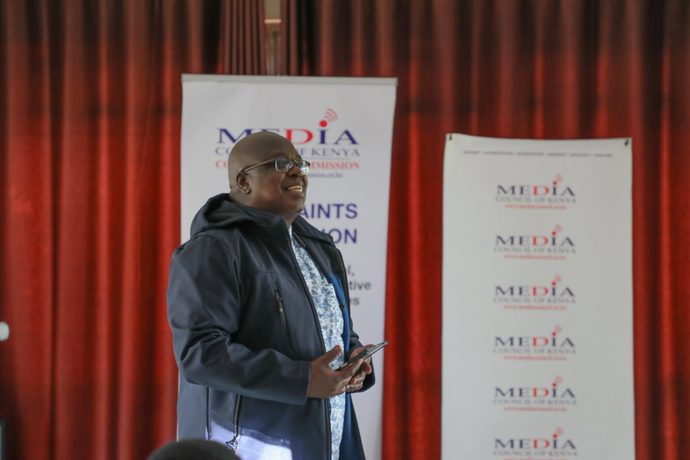
MCK Chief Executive Officer David Omwoyo said the exercise was guided by two key obligations: respect for the rule of law and a clear interpretation of the court order.
“We are here basically to do one simple thing, obey the courts, the law of the land, and understand how we have translated that court order,” he said.
Omwoyo said the need to amend the Act had been evident for years, noting that the legislation had been in force for a decade.
He attributed some of the challenges to the Council’s historical formation, which involved transforming an existing civil society media body into a statutory public watchdog and regulator.
He said inconsistencies in the law had contributed to disputes whenever the Council undertook key governance processes, including recruitment.
The proposed reforms, he added, would clarify the Council’s institutional foundation and strengthen its capacity to discharge its mandate effectively.
Complaints Commission Chairman Demas Kiprono also called for a review of the Act, pointing to the changes that had occurred since its development more than a decade ago.
He said the evolving media industry had brought new trends in the complaints received by the Commission, making it necessary to ensure that the proposed legislation reflected current realities.
“So much has changed in the media landscape. What we perceive as media has especially changed, and we can see a reflection of that in the newly adopted code,” Kiprono said.
“As a Commission, we have also seen new trends in how complaints are coming in, and perhaps as we look into this document, we need to ensure that the changes reflect the new realities.”
Presenting the draft Media Council Bill, Manager for Regulatory Affairs Terence Bavon Minishi called for clearer statutory boundaries to prevent institutional overreach and conflicting processes in media regulation.
He invited participants to contribute their views on the proposals to enrich the document, saying feedback from the meeting would be consolidated with submissions gathered during other similar engagements already undertaken.
Among the proposed changes is the renaming of the Complaints Commission to the Media Complaints Commission, a designation described during the discussions as common among sector regulators.
Another proposal seeks to remove the term “foreign journalist” as a separate category in the Act to avoid creating the impression of differential treatment. The distinct accreditation requirements for foreign journalists would instead be set out in the accreditation guidelines.
The proposed amendments would also expand the definition of journalism to include digital platforms, which are not covered by the current definition in the Act.
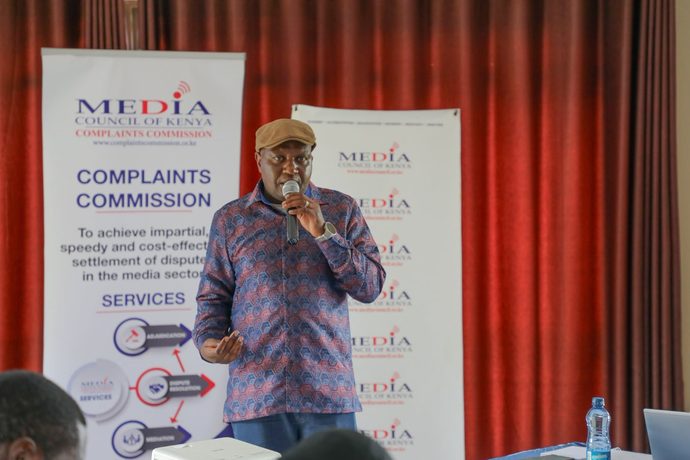
Accreditation and professional training
The proposed changes to professional standards also prompted questions about access to training for journalists who are not accredited by the Council.
Board member Temesi Mukani questioned why non-accredited journalists would be excluded from professional training offered to accredited practitioners, arguing that professional development should not be tied solely to accreditation.
“The new proposal simply says that if you are a journalist and not accredited, you will not benefit from professional training offered by the Council. In terms of media development, a journalist does not need to be tied to accreditation,” Mukani said.
In response, MCK Board member and legal expert Alvin Kosgei said journalists would need to undergo the accreditation process to fall within the scope of the Act.
“We are trying to professionalise, and to do that we have to subscribe to the profession through a process of administration,” he said.
Board member Susan Karago said accreditation should begin with media enterprises, which are required to undertake the process annually, and extend to the journalists working for them.
“The accreditation starts with the media enterprise because they must undertake the yearly process, and the journalists working in them do not have leeway not to do it. It is important to confirm that the person is a journalist and accredited to ensure follow-up,” she said.
Proposed expansion of MCK’s regulatory powers
A significant part of the discussions focused on a proposed shift in the Council’s role from that of a facilitator to an active regulator.
The proposed change would enable MCK to investigate and determine cases involving violations of media standards, strengthening its regulatory powers and aligning its functions with those of other regulators empowered to take action against professional misconduct.
However, the proposal elicited differing views among participants, particularly over the potential duplication of jurisdiction between MCK and the Complaints Commission.
The concerns highlighted the need to clarify the respective mandates of the two institutions as the Council considers reforms intended to strengthen media regulation while avoiding overlapping responsibilities.
The proposed amendments are expected to clarify the Council’s functions, strengthen its regulatory authority and address emerging issues in the media sector, including digital journalism, artificial intelligence and new forms of content distribution.
-This story was first published by MCK