By Nyang’au Araka
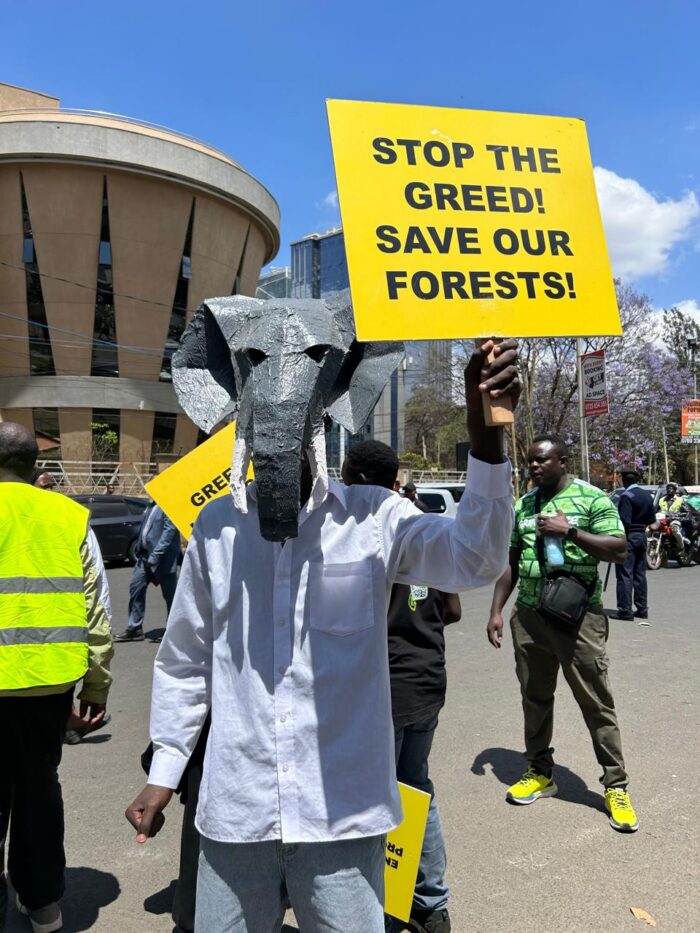
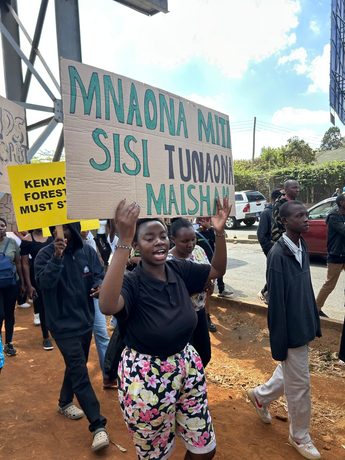
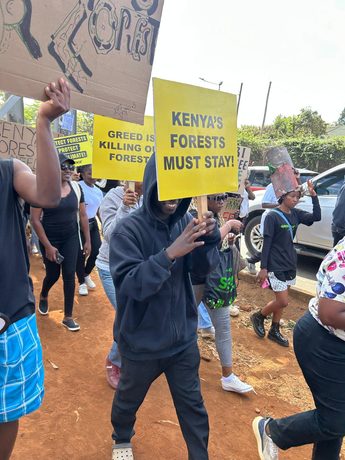
More than 60,000 Kenyans have petitioned the government to immediately halt “the continued destruction and excision of protected forests across the country.”
In an open letter, dated October 6, Greenpeace Africa, the Green Belt Movement, JustAct, Friends of Nairobi National Park and other civil society organisations urged Environment Cabinet Secretary Deborah Barasa to prioritise protection of existing forests ahead of the national Mazingira Day celebrations on October 10.
Also Read
The groups said there was growing public concern over projects in forests and other protected ecosystems, citing Imenti, Nairobi National Park, Ngong Road Forest, Karura, the Aberdares, the Mau Forest Complex and Suam Forest.
“We come to your office (today) on behalf of more than 60,000 Kenyans who have signed a petition demanding that the government immediately stop deforestation and protect Kenya’s forests,” the organisations said.
They described forests as critical water catchments supporting rivers, agriculture, industries and communities, and warned that continued excisions and development projects could undermine conservation efforts.
In Imenti Forest, the groups cited a May 6, 2026 concurrence by the Principal Secretary for Forestry for the excision of 2.75 hectares.
They linked the area to reported plans for an airstrip, golf course and State Lodge, and claimed construction of the airstrip had continued despite a court order blocking the works.
The organisations also raised concerns over developments in Nairobi National Park, where they said court filings had raised questions about tree felling and clearing linked to the relocation of the Nairobi Animal Orphanage and a proposed 1,300-vehicle parking facility.
They said 4,642 Kenyans had gone to court over the developments and alleged that petitioners were excluded from a court-ordered site inspection in July.
At Ngong Road Forest, the groups said the forest had declined from about 2,850 hectares when it was gazetted in 1932 to approximately 1,224 hectares following successive excisions.
They cited July 2026 works involving heavy machinery to clear a road linking Talanta Stadium to Bomas, as well as construction of an eco-lodge in the Sanctuary Block. They said the Environment and Land Court subsequently issued conservatory orders halting the two projects.
The organisations further asked the government to confirm its reported decision to halt a project to house National Youth Service personnel at Rangers Village in Karura Forest and restore areas already cleared.
They also called for greater transparency over a proposed 52-kilometre road through the Aberdare National Park and Forest, saying the government should publicly explain how environmental safeguards attached to the project would be enforced.
The Mau Forest Complex also featured prominently in the petitioners’ concerns. They cited the lifting of the logging ban announced in October 2025 and said there had been no public disclosure of the framework required before logging could resume.
In Trans Nzoia, they opposed plans to allocate 50 acres of Suam Forest for a border town and housing project linked to the one-stop border post with Uganda.
The groups said the government’s 15 billion tree programme should not be used as a substitute for protecting mature indigenous forests.
“A seedling planted on a hillside today cannot do the work of an indigenous forest that has taken centuries to grow,” they said.
They urged the ministry to halt destructive projects, respect court orders, strengthen community participation, disclose forest excisions and licences, and prosecute those responsible for illegal logging and land grabbing.
They also asked Barasa to use Mazingira Day to outline a national forest protection plan and provide annual reports on forest protection outcomes.
The organisations have given the ministry 30 days to provide a written public response to their demands.
The letter comes as Kenya prepares to culminate Mazingira Week on October 10 with nationwide tree-planting activities under the government’s 15 billion tree programme.