
By GPC News Desk
Nyaribari Chache MP Zaheer Jhanda has proposed changes to Kenya’s electoral system that would see political parties submit nominees for special parliamentary and county assembly seats only after the General Election.
Jhanda, who sits on the National Assembly’s Transport and Infrastructure and Regional Integration committees, said the proposed change would link party-list nominations more directly to the results of the election.
Also Read
In a statement dated September 23, 2026, the MP said political parties should first compete in the General Election before determining who takes up party-list seats allocated to them.
“The principle is simple: Let Kenyans vote first. Let the electoral outcome determine the allocation of seats. Then let the corresponding party-list nominations follow that outcome,” Jhanda said.
Article 90 of the Constitution provides for the election of designated National Assembly, Senate and county assembly seats through proportional representation using party lists.
The seats are subsequently allocated to political parties in proportion to the seats won by their candidates in the General Election.
Under the existing law, however, parties submit their lists before the General Election. Section 35 of the Elections Act requires political parties to submit their party lists to the Independent Electoral and Boundaries Commission (IEBC) at least 45 days before the election.
The IEBC applied the system in the 2022 General Election, requiring parties to submit their lists by June 25, 2022. The Commission received lists from 81 of the 83 political parties cleared to participate in that election.
Jhanda wants that sequence changed so that parties would submit their final nominees after the number of seats due to each party has been established from the election results.
“This proposal is intended to make the process more directly connected to the actual electoral outcome,” he said.
He said the proposed reform would retain constitutional safeguards, transparency, fairness and proportional representation, while giving voters a more direct connection to the eventual allocation of party-list seats.
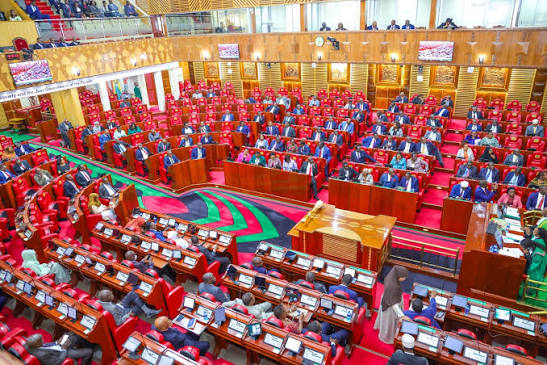
The current system requires parties to submit lists containing enough candidates to fill all the party-list seats they could potentially receive. The names are arranged in a prescribed order of priority, with requirements including gender alternation in most categories and other constitutional and regulatory safeguards.
Kenyan courts have also dealt with disputes arising from party-list nominations, including questions over the order of candidates and the allocation of special seats.
The courts have affirmed that the seats are allocated to parties in proportion to the seats they win in the General Election, while nominees are drawn from lists submitted by the parties.
Jhanda said his proposal should now be subjected to public and legislative scrutiny.
“I believe this is an important issue that deserves serious public and legislative debate,” he said.
The proposal would require changes to the existing statutory framework governing the preparation and submission of party lists, since the Elections Act currently sets the submission deadline before the General Election.