By Nyang’au Araka
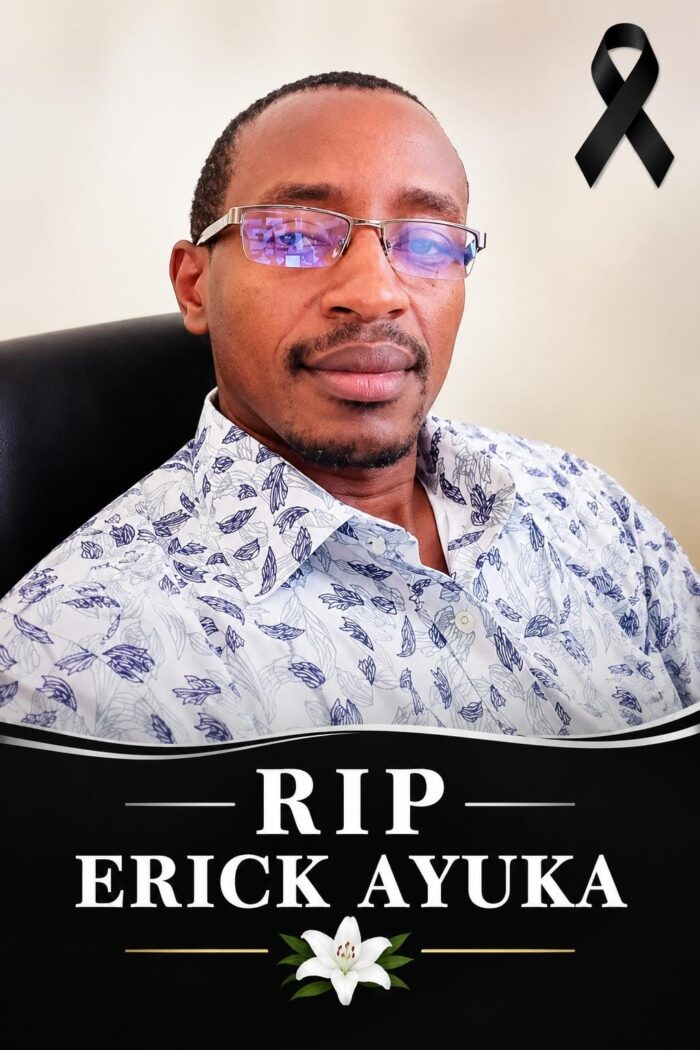
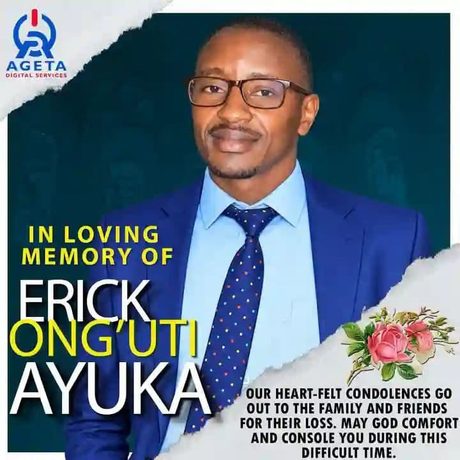
There are people whose deaths you mourn because you knew them, and then there are those whose deaths make you revisit an entire chapter of your own life. Eric Ong’uti Ayuka was one of those people.
I knew Eric long before the hospital beds, medical reports, fundraising appeals and frightening figures on hospital bills.
Also Read
I knew him through his brother, Wilson, long before sickness came knocking at his door.
He was not someone who entered my life because he was ill; he was part of my life before illness changed everything.
In fact, Eric designed my house and that is one reason why his death feels painfully close.
Every wall, every room and every corner carries a memory of someone whose hands once translated an idea on paper into something solid and habitable.
Eric helped create something that still stands, even as the man who created it is gone.
Perhaps that is one of the cruelties of death: the world keeps the things people built while it takes the people who built them away.
Eric was in his late thirties when his struggle became public.
At an age when many people are still expanding their dreams, building careers, raising families and making plans for the decades ahead, Eric found himself fighting to stay alive.
He was a civil engineer at the County Assembly of Nyamira, with a profession, a family and a future that should have stretched much further.
Then his kidneys failed.
Eric was eventually taken to India for a kidney transplant, but getting him there required enormous sacrifice.
Family, friends and well-wishers rallied behind him, property was sold, contributions were sought and people gave what they could because they believed that, if enough hands reached out, perhaps they could pull him back from the edge.
The transplant was successful, and for a moment there must have been hope that the worst was finally behind him.
Perhaps the family imagined Eric returning home, recovering and beginning again.
But after he returned to Kenya, complications emerged and he was readmitted to MP Shah Hospital in Nairobi, where he underwent specialised treatment, including a graft biopsy and steroid pulse therapy, with several specialists involved in his care.
While doctors fought to save his body, another battle was taking place outside the hospital room: the battle to keep paying.
By the time I did his story for the Gusii Press Club in May 2025, the hospital bill had already crossed Sh6 million, while the family had paid about Sh1.6 million and his employer-provided medical cover had been exhausted.
What had begun as a medical emergency had become a financial catastrophe.
The family sold what it could, called friends and relatives, appealed to strangers and fundraised again and again because when someone you love is lying in a hospital bed, you do not accept that money should determine whether he gets another chance at life.
Eventually, the bill passed Sh10 million.
Ten million shillings is difficult to comprehend in relation to a human life.
But for Eric’s family, it was not merely a figure on a spreadsheet.
It represented medicines, doctors, procedures, hospital days and the desperate hope that somehow the next payment would buy more time.
What remains particularly moving to me is the compassion his struggle drew from people, including someone who was himself battling stage-four cancer.
Her own resources had been depleted by illness, yet after hearing about Eric’s condition, she sent Sh2,000.
Against a bill running into millions, it may have appeared insignificant, but compassion has never been measured only in figures.
Here was a woman fighting her own battle, with her own body failing her, reaching into what little remained and saying, in effect, I know what it means to need help. Take this.
That gesture captured something no hospital report could adequately describe: people cared about Eric.
They cared enough to sacrifice, to keep asking, to keep giving and to keep believing that he could still come home.
And perhaps that is why his death hurts so deeply.
Later again, he was hospitalized in Nyamira, Moi Teaching and Referral Hospital (MTRH) and Kenyatta National Hospital (KNA), where he died recently, leaving yet another bill of close to Ksh.2 million.
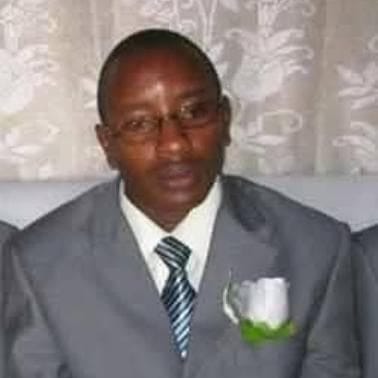
Eric did not slip silently out of the world without anyone noticing.
One time, he boldly shared with this writer the then prevailing situation at the dialysis department of Nyamira County Referral Hospital, information which formed the writing on a major expose.
There was assurance that the department would be revamped, and this happened soon after, restoring hope for many patients who rely on the facility for dialysis.
In sum, Eric fought. There was a fight for him, a long, painful and extraordinarily expensive fight, with many volunteering to donate blood for him, and his family consistently praying for him.
At one point, his mother, whom I know very well, went to preach the word of God during the Seventh Day Adventist (SDA) camp meetings for a whole week while her son was in the hospital.
Indeed, his family had refused to surrender. Friends kept mobilising, well-wishers kept giving, doctors kept trying, and people like us kept telling his story because we all wanted the same thing: for Eric to live.
In the end, we lost him.
Perhaps for those who knew Eric or heard about him, the hardest thing now is learning to live with his absence, holding on to the hope that death is not the end, and that one day the man whose life touched so many will rise again.
To help the family defray medical bills and funeral expenses, send your donation to Wilson Ayuka via Mpesa number +254722170934.
– Mr Araka is a volunteer editor at Gusii Press Club.