By GPC Reporter
Kenya and Tanzania have renewed calls for stronger joint action to protect the Mara River Basin.
Stakeholders warned that deforestation, pollution, uncontrolled water abstraction and climate change are putting increasing pressure on the shared ecosystem.
Also Read
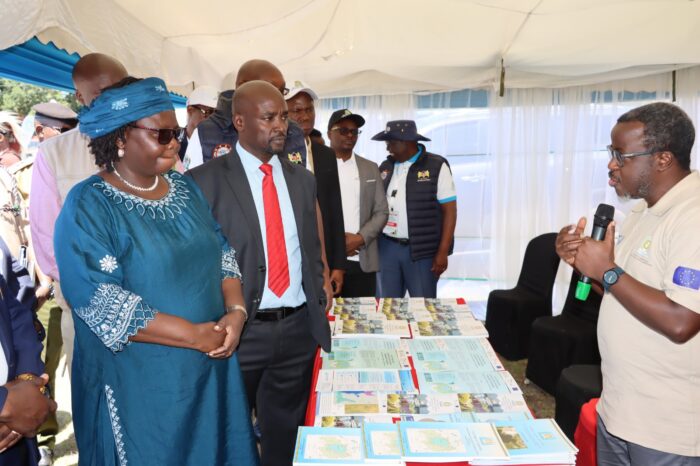
The warning came on Tuesday during the 15th Mara Day celebrations held at Bomet Stadium, bringing together government officials, conservationists, researchers, communities and development partners from the two East African countries.
The four-day celebrations, organised by the Lake Victoria Basin Commission (LVBC) under the East African Community, ran from September 12 to 15 and included tree planting, environmental clean-ups, conservation exhibitions, sports, essay competitions and the marking of riparian setbacks.
The stakeholders’ forum held on Monday at Bomet University focused on the challenges facing the transboundary basin and the need for Kenya and Tanzania to coordinate management of the river from its source in the Mau Forest to its downstream ecosystem in Tanzania.
LVBC Executive Secretary Dr Masinde Bwire said conservation commitments must be followed by practical action.
“The Mara River is more than a river, it is a lifeline for millions of people and wildlife across Kenya and Tanzania. Its future depends on how we act today,” Bwire said.
Stakeholders identified deforestation, unsustainable agricultural practices, encroachment on riparian areas, pollution and rising water abstraction among the major threats to the basin.
Climate change has added pressure through prolonged dry spells, erratic rainfall and flooding, affecting agriculture, water availability and livelihoods in communities that depend on the river.
The basin also supports wildlife and tourism in the Maasai Mara and Serengeti ecosystems, while providing water for households, livestock and farming communities in Kenya and Tanzania.
Damas Mbaga, the International Union for Conservation of Nature (IUCN) Transboundary Basin Coordinator for the Mara River Basin, said the river should be viewed as a shared ecosystem rather than simply a waterway.
“The Mara River is more than a river,” Mbaga said, describing it as a shared ecosystem connecting landscapes, communities and economies across Kenya and Tanzania.
Participants called for stronger joint planning, coordinated monitoring and harmonised approaches to conservation, arguing that activities upstream have consequences for communities and ecosystems downstream.
They also proposed increased restoration of degraded catchments, including the Mau Forest Complex, through reforestation, agroforestry and wetland rehabilitation.
Integrated water resources management was identified as necessary to balance competing demands for water while maintaining environmental flows. Stakeholders also called for greater adoption of climate-smart agriculture, water harvesting and early warning systems.
The meeting further highlighted the need for sustainable financing of conservation, including payment for ecosystem services and enforcement of the polluter-pays principle.
Community participation was also identified as critical, with stakeholders calling for women, youth and indigenous communities to be involved in decisions affecting the basin.
The 15th Mara Day was held under the theme “Mara River, Diverse Lives: Keep It Thriving”, also rendered in Swahili as “Mto Mara, Uhai wa Viumbe, Tuuutunze.”
Mara Day was established in 2012 after the 10th Sectoral Council of Ministers for the Lake Victoria Basin designated September 15 as an annual day to promote awareness and conservation of the Mara River Basin.
The celebrations are hosted rotationally by Kenya and Tanzania.
The 2026 celebrations followed last year’s event in Butiama District in Tanzania and marked Kenya’s turn to host the regional conservation event.
Stakeholders said the future of the Mara Basin will depend on whether Kenya and Tanzania can translate annual conservation commitments into sustained action across the river’s entire ecosystem.