By GPC Correspondent
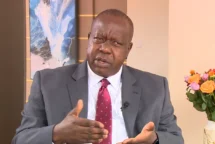
National Assembly Speaker Moses Wetang’ula has challenged women to move beyond supporting male politicians and directly contest elective positions in the 2027 General Election.
Wetang’ula said greater participation of women in elective politics was essential to increasing their representation in decision-making at both county and national levels.
Also Read
“Women should not only be voters and supporters of other people’s political ambitions. I want to see more women come forward, seek elective positions and compete for leadership at all levels,” Wetang’ula said.
He spoke on Wednesday during a meeting with women leaders representing the four wards of Kimilili Constituency at his residence in Kabuchai. He was accompanied by Bungoma Senator David Wakoli and Webuye East MP Martin Pepela.
The meeting focused on education, infrastructure, livelihoods and the role of women in political leadership ahead of the 2027 elections.
Wetang’ula cited Sitikho MCA Grace Sundukwa as an example of a woman who had built a strong political base and successfully retained an elective position.
Sundukwa has been elected three times as the Member of the County Assembly for Sitikho Ward in Webuye West Constituency.
“Look at Grace Sundukwa, a small girl we picked from the university. She has been elected three times. That tells you that a woman can organise herself, win the confidence of the people and serve successfully for several terms,” he said.
He urged women to draw inspiration from Sundukwa and pursue elective seats rather than waiting for nominations or appointments.
“I want the women here to look at such examples and say, ‘If she can do it, I can also do it.’ Do not wait to be nominated or appointed. Come out and compete for elective seats.”
Moses Wetangula
“We need more Grace Sundukwas. We need women who are ready to take the political risk, go to the people, explain their agenda and ask for their votes.”
Wetang’ula said women seeking a greater voice in decisions affecting their families, communities and the country must be prepared to pursue elective office.
“Leadership is not given; it is pursued,” he said.
He also urged eligible Kenyans, particularly young people and women, to register as voters ahead of the 2027 General Election.
“Do not sit at home and complain about leadership when you have not taken part in choosing your leaders,” he said.
Wetang’ula backs Kenya Kwanza
The Speaker further urged residents of Western Kenya to remain supportive of the Kenya Kwanza administration, which they helped elect in 2022.
He cautioned voters against shifting political allegiance without considering the policies and development record of the government.
“We must not be deceived into abandoning a government that we helped to put in place in 2022 for an opposition whose direction and agenda for this country are not clear,” he said.
Wetang’ula argued that the region had benefited from its political alignment with the national government, citing investments in education and infrastructure.
He singled out Kisiwa, Sang’alo and Matili national polytechnics in Bungoma County as examples of investments in technical and vocational education.
“Before the 2022 elections, Bungoma did not have a national polytechnic. Today, we have Kisiwa, Sang’alo and Matili. These are tangible investments that our people can see and benefit from,” he said.
He said the institutions were expanding access to technical training and equipping young people with skills to improve their economic prospects.
Looking ahead to the 2027 elections, Wetang’ula said Western Kenya needed to make strategic political choices if the region hoped to play a bigger role in national leadership beyond the next election.
“As a region, we must think beyond 2027. If we want to play a bigger role in the leadership of this country in 2032, we must make strategic political choices today,” he said.
He called for unity in the region, saying political cohesion would be critical in protecting development gains, completing ongoing projects and attracting further investment.
“Politics is about strategy, organisation and partnerships. We must know where we are going as a region and make decisions that advance our interests,” he said.