By Nyang’au Araka
A landmark policy brief has laid bare the growing crisis of electronic waste in Kenya and Ghana, warning that toxic dumping disguised as donations and recycling is endangering lives and ecosystems.
In Kenya, where about 70 percent of electronic equipment is imported, much of it arrives near the end of its useful life, quickly swelling the country’s already mounting e-waste burden.
Also Read
The country now generates roughly 51,000 metric tonnes of electronic waste annually, making it the fastest-growing waste stream, yet only about one percent is formally recycled.
The human cost of this crisis is starkly visible in Nairobi’s Korogocho settlement, where informal waste pickers bear the brunt of unsafe recycling practices such as open burning, acid leaching, and crude dismantling.
Surveys show that 61 percent of waste pickers report health problems linked to e-waste exposure, with nearly half suffering respiratory complications and over a third dealing with skin infections.
Children as young as six are involved in sorting and burning electronics to extract valuable metals like copper, silver, and aluminium, exposing them to dangerous toxins including lead, cadmium, and carcinogenic fumes.
Speaking during the launch of the policy brief and factsheet, Greenpeace Africa’s Pan-African Plastics Project Lead Hellen Kahaso Dena described the situation as “waste colonialism in action.”
Dena accused wealthy nations of offloading hazardous materials onto vulnerable African communities under the guise of development aid.
She noted that the overwhelming majority of e-waste is processed in informal settings, where workers—often from marginalized groups—handle toxic substances without protection.
“These are not abstract numbers,” she said.
“Behind every statistic is a mother, a child, a young man trying to earn a living by picking through the world’s discarded electronics with his bare hands.”
Kahaso called for urgent government intervention, urging Kenya and Ghana to enforce Extended Producer Responsibility regulations, formalize and protect informal waste workers, and strengthen border controls to block illegal shipments.
She emphasized that while solutions exist, the key obstacle remains a lack of political will.

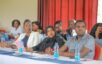
The report’s findings were presented at an event held at Alliance Française in Nairobi to mark the United Nations International Day of Zero Waste, bringing together policymakers, civil society actors, researchers, and community representatives.
The event also featured a powerful photojournalism exhibition by Kenyan photographer Edwin Nyamasyo, whose images captured the harsh realities faced by communities living on the frontlines of the crisis.
“These images are not easy to look at, but they are far harder to live with,” he said, underscoring the urgency of confronting the issue.
Beyond Kenya, the crisis extends to Ghana’s Agbogbloshie, widely regarded as the world’s largest electronic waste dump, which continues to receive vast quantities of discarded electronics, mainly from Western Europe and the United States.
The situation worsened after China’s 2017 ban on foreign waste imports redirected global waste flows toward Africa.

Much of this waste is falsely labeled and shipped in violation of international agreements such as the Basel and Bamako Conventions, which are meant to prevent the movement of hazardous waste into the continent.
The policy brief outlines a range of recommendations, including stricter enforcement of existing regulations, ensuring that imported electronics are functional and destined for reuse, and requiring hazardous processing to be handled in exporting countries.
It also calls for the formal recognition and protection of informal waste workers through safety training, provision of protective gear, and integration into regulated recycling systems.
Additionally, it urges investment in a circular economy through support for repair and recycling enterprises, expansion of e-waste collection infrastructure, and nationwide awareness campaigns to encourage responsible consumer behavior.