By Nyang’au Araka
Inside Theatre at Kenyatta National Hospital (KNH), time stretched differently on a morning that began like any other but would end with celebration, exhaustion, and relief.
For seven uninterrupted hours, a team of surgeons, anaesthetists, nurses, and technicians worked in near silence, focused on a single objective: removing a massive 4-kilogram tumour lodged in a patient’s liver.
Also Read
By the time the final stitch was placed, what had once threatened a life had been removed—and what remained was something far more powerful: hope.
The complex right hepatectomy, one of the most demanding procedures in hepatobiliary surgery, was the highlight of a three-day Hepato-Pancreato-Biliary (HPB) Surgical Camp held at KNH from June 10–12, 2026.
The operation marked a turning point not only for the patient but also for Kenya’s growing capacity in advanced surgical care.
“This is the kind of case that tests every layer of surgical skill and coordination,” one of the attending specialists noted.
“From planning to execution, there is no room for error. Every decision matters.”
The surgery was led by HPB specialists Prof. Soriman, working alongside KNH and University of Nairobi surgeons Dr K. Ondede, Director of Surgical Services, Dr Muia, Dr Kaisha, and Dr Nthambi, with additional support from invited experts Dr Karan and Dr Misoi.

But beyond the surgeons at the table, an entire ecosystem of expertise made the operation possible, according to a statement posted by KNH on social media.
The anaesthesia team—Dr Simiyu, Dr Kasuku, Dr Muchiri, Mr Kwame, and residents Dr Atieno and Dr Monda—maintained constant vigilance as the patient’s stability hung delicately in balance. In theatre, every beep, every reading, every movement mattered.
At the heart of the room was also the nursing team led by B. Khandega, supported by C. Tuwei, M. Wambui, S. Njeru, D. Kemuma, P. Nyaga, J. Kinyanjui, and Moraa, whose precision and coordination ensured the operation ran seamlessly.
Technical support staff C. Muthengi and W. Owelle kept critical systems functioning without interruption.
By the end of the camp, KNH had delivered 13 highly specialized HPB procedures, including four liver resections, one Whipple’s procedure, two hepaticojejunostomies, and six laparoscopic cholecystectomies.
The intensity of the schedule reflected both the urgency of patient need and the growing ambition to expand access to advanced surgical care within the country.

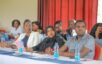
Led by Dr. Gibson Musila, Head of the Department of General Surgery at KNH, the camp was designed not only as a treatment initiative but also as a training ground. Visiting surgeons from the University of Science and Technology Hospital in Egypt worked side by side with Kenyan teams, sharing techniques and strengthening local expertise in liver, pancreatic, and biliary surgery.
For many young clinicians in attendance, the experience was as transformative as the surgeries themselves.
It was a rare opportunity to witness, in real time, the level of coordination required to tackle some of the most complex procedures in modern medicine.
In the aftermath of the marathon operation, the significance of what had taken place extended beyond the operating theatre walls.
It was a demonstration of what is possible when skill, collaboration, and preparation converge—and when a hospital pushes the boundaries of what can be done locally.