By Kwamboka Angira
The Collaborative Labeling and Appliance Standards Program (CLASP) and the Makueni County Government have signed a five-year Memorandum of Understanding (MoU) to expand clean cooking solutions across public institutions.
The initiative is targeting more than 4,500 people in 63 vocational training centres across the county.
Also Read
The agreement seeks to accelerate the shift from polluting fuels such as charcoal and firewood to modern energy cooking technologies.
Under the deal, the Modern Energy Cooking Services (MECS) programme—funded by the UK Foreign, Commonwealth and Development Office—will collaborate with clean cooking suppliers to support institutions in transitioning to cleaner energy.
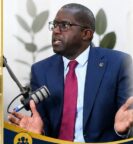
Speaking at the Kenya International Investment Conference 2026 in Nairobi, Nyamolo Abagi, Director of Clean Energy Access at CLASP and CLASP/MECS Programme Lead, said traditional cooking methods pose serious health and environmental risks, including indoor air pollution and heat stress for cooks.
“This partnership is about the dignity of cooks in our institutions. They work hard to feed learners every day. We spend years building evidence and market systems to make clean cooking affordable,” said Abagi.
Makueni Governor Mutula Kilonzo welcomed the partnership, noting that clean cooking presents a major opportunity for the county, which has already committed Sh157 million to solar energy.
He said Makueni has laid the groundwork through the County Energy Plan (2023–2032), Energy Policy 2025, and pilot clean cooking projects in institutions.
“We know what is possible when the right partners show up. This partnership with MECS and CLASP is about turning that commitment into scale, while reducing the fuel costs that drain our institutions and creating skilled jobs for our young people in the clean energy sector,” said the governor.
Stakeholders’ push
The agreement comes as stakeholders push to scale up clean cooking in institutions—an area experts say has long been overlooked despite heavy reliance on biomass fuels.
Across sub-Saharan Africa, hundreds of thousands of schools, health facilities and training centres still depend on firewood and charcoal.
The signing also coincides with the launch of Kenya’s first Institutional Clean Cooking Sector Pack, which estimates a KSh72 billion ($559 million) investment opportunity to transition more than 100,000 institutions serving 12.6 million people to modern cooking solutions.
Governor Kilonzo added that the partnership will support adoption of cleaner, more efficient technologies while strengthening market systems for sustainable energy use in the public sector.
Deputy President Kithure Kindiki called for stronger collaboration between the private and public sectors to drive investment, noting that partnerships are key to unlocking Kenya’s economic potential.
“The government is prioritising Public-Private Partnerships to bridge financing gaps in critical sectors including energy, infrastructure and manufacturing because the government alone cannot meet the country’s development needs,” said Prof Kindiki.
He added that the government is working to create a more predictable policy and regulatory environment to attract both local and foreign investors, positioning Kenya as a regional investment hub through ongoing reforms aimed at improving ease of doing business and enhancing transparency in public projects.