By Kurian Musa
The African Union (AU) Ordinary General Assembly on February 15, 2025, in Addis Ababa, Ethiopia, marked a pivotal moment in African diplomacy and Kenyan politics.
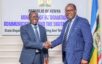
Kenya’s former Prime Minister (PM), Raila Odinga lost his bid for the African Union Commission (AUC) Chair to Djibouti’s Youssef in the seventh round of voting.
Also Read
The high-stakes race, characterized by intense diplomatic lobbying led by President William Ruto and Prime Cabinet Secretary Musalia Mudavadi, ended with Raila falling short despite a vigorous campaign.
This outcome carries significant implications for Kenya’s political realignments and Africa’s geopolitical landscape.
Diplomatic Manoeuvres and Regional Dynamics
Raila’s candidacy was backed by robust diplomatic efforts, with President Ruto leveraging his role as the East African Community (EAC) Chair to consolidate regional support.
However, the traditional voting patterns within the AU—particularly the divide between Francophone and Anglophone countries—proved difficult to overcome.
Francophone countries, historically wary of supporting Anglophone candidates when they have their own in the race, coalesced around Djibouti’s Youssef, making Raila’s path to victory increasingly narrow.
Additionally, the geopolitical complexities surrounding the Democratic Republic of Congo (DRC) played a critical role.
President Ruto had tried to push for a joint EAC-SADC meeting to address the DRC situation aimed to unify the two blocs in support of Raila.
However, this strategic move did not yield the desired outcome, as regional loyalties and interests took precedence.
Impact of Global Politics on AU Voting Patterns
International relations further complicated Raila’s campaign.
President Ruto’s perceived alignment with Israel amidst the ongoing Gaza conflict potentially alienated the bloc of Islamic nations within the AU, whose support was crucial.
This foreign policy stance may have contributed to Raila’s inability to secure the necessary votes from North and West African countries, which traditionally hold sway in AU elections.
Local Politics and Perception of Raila’s Bid
Domestically, Raila’s candidacy was intertwined with Kenya’s political landscape.
His alignment with President Ruto’s administration, including the controversial appointment of cabinet secretaries from his Orange Democratic Movement (ODM) party, was interpreted by some as a strategic positioning ahead of the 2027 elections.
However, this perceived political rapprochement alienated sections of his support base, particularly the Gen Z activists who had mobilized against the government’s policies but felt betrayed by Raila’s cooperation with Ruto.
To mitigate this fallout, ODM co-opted Gen Z leader Kasmuel Mc’Oure, attempting to rebrand and rejuvenate the party’s image among younger voters.
Yet, the symbolic presence of Mc’Oure at the AU assembly was insufficient to counteract the political disillusionment brewing at home.
Lessons and Implications for Kenya’s Political Landscape
Raila’s loss at the seventh round of voting underscores the complexity of AU politics and the influence of historical alliances.
It also reflects the challenges of balancing continental diplomacy with domestic political realities.
For President Ruto, the defeat highlights the limitations of regional solidarity when pitted against entrenched linguistic and geopolitical blocs.
For Raila Odinga, the outcome raises questions about his political trajectory and influence in Kenya’s evolving political landscape.
One may argue that his bid for the AUC Chair was a strategic retreat, positioning him for a potential comeback in the 2027 Kenyan elections.
However, his loss complicates this narrative, necessitating a recalibration of his political strategy.
Ultimately, the AU election has not only shaped Africa’s diplomatic dynamics but also set the stage for political realignments in Kenya, with the shadow of the 2027 elections looming large.
The loss, while significant, may yet redefine Raila Odinga’s legacy in Kenyan and African politics.
-Musa is a Journalist and Public policy Researcher, and a member of Kisii Press Club. E-mail: kmusaonline@gmail.com