By Nyang’au Araka
Kenya is facing a critical shortage of medical specialists, leaving patients across the country without access to life-saving care, a leading doctor has warned.
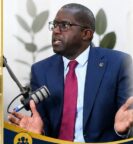
In a detailed opinion, Dr. Cheptinga K. Philip, Chief Nephrologist and Head of Transplantation at Moi Teaching and Referral Hospital (MTRH), said the country’s health challenges go beyond the number of doctors and point to a deeper gap in specialized care.
Also Read
“A mother in Eldama Ravine risks death under a collapsing theatre roof. A child in Turkana with congenital heart disease waits two years for treatment abroad. A young teacher in Kisii dies of kidney failure because we have only 42 nephrologists for 54 million people,” he said.
He added: “This is not a doctor shortage. This is a specialist shortage.”
Dr. Cheptinga noted that while Kenya has trained thousands of general practitioners, it has not invested enough in sub-specialists and super-specialists needed to handle complex conditions in both adults and children.
The doctor is now calling for an ambitious long-term plan under Vision 2050 to transform Kenya into a hub for specialized medical care.
Among the proposals is the training of 250,000 doctors by 2050, with at least 60 percent specializing in advanced fields across more than 500 disciplines, including interventional cardiology, paediatric gene therapy and clinical pharmacology.
He also proposed the creation of up to two million jobs in the health sector, spanning doctors, nurses, technicians, pharmaceuticals, medical technology, research, and health-related industries.
“Kenya cannot be a middle-income nation with low-income healthcare. By 2050, we must be a net exporter of medical expertise, not patients,” he said.
Currently, the country is estimated to lose more than KSh 10 billion annually through medical tourism, as patients travel abroad for treatment.

Four-pillar strategy
To address the crisis, Dr. Cheptinga outlined a four-pillar strategy anchored on training, infrastructure, policy and industrial growth.
The first pillar proposes the creation of a National Fellowship Fund to support 500 sub-specialty training slots annually starting 2027, rising to 5,000 by 2040.
He estimates the cost at KSh 5 billion per year, about 0.15 percent of the national budget.
“Each super-specialist can generate over 40 jobs and save up to KSh 200 million in foreign referrals over a career,” he said, proposing a 10-year public service bond for beneficiaries.
The second pillar focuses on upgrading six major hospitals—Moi Teaching and Referral Hospital, Kenyatta National Hospital, Kenyatta University Teaching, Referral and Research Hospital, Coast General Hospital, Jaramogi Oginga Odinga Teaching and Referral Hospital in Kisumu, and Garissa—to Level 7 super-specialty hubs by 2032.
These facilities would host more than 50 sub-specialties each, supported by advanced equipment such as transplant theatres, catheterization labs, PET scans and simulation centres.
The third pillar calls for legal reforms to require every medical school to offer at least 25 sub-specialty programmes by 2035 or risk losing accreditation.
It also proposes importing 200 super-specialists between 2026 and 2035 on fixed teaching contracts.
“Their job is simple—train 10 Kenyans each and go home. We must build our own capacity,” he said.
The fourth pillar focuses on “health industrialization,” including incentives for local production of pharmaceuticals and medical devices, improved insurance payments for specialized care, and expanded telemedicine to connect remote areas with experts.
“Geography must not be a death sentence,” he said, citing the need for real-time consultations between rural clinicians and specialists.

Appeal to government and counties
Dr. Cheptinga urged the national government to establish a presidential taskforce within 90 days and allocate KSh 5 billion for the fellowship fund and KSh 12 billion for infrastructure in the 2026/2027 budget.
He also called for bilateral training agreements with countries such as India, South Africa, Egypt, the United Kingdom, the United States and Cuba, tied to mandatory return-to-service requirements.
County governments, he said, must take ownership by prioritizing at least 10 sub-specialties each based on local disease patterns, while allocating 40 percent of facility improvement funds to equipment and training.
“Stop painting walls when theatres are collapsing,” he said.
He further called for better pay and housing for specialists to prevent brain drain. “No super-specialist will stay where salaries delay for months or where they lack decent living conditions,” he added.
Dr. Cheptinga challenged citizens to hold leaders accountable on healthcare delivery.
“Stop clapping for wards without doctors. Ask your leaders how many specialists your county has, and why hospitals lack critical equipment,” he said.
He also urged fellow doctors to pursue specialization, saying the future of healthcare depends on expertise.
“General practice saves lives. Super-specialty practice saves nations,” he said.
He concluded by urging immediate action, warning that delays will continue to cost lives.
“The adults and children of Kenya are waiting. Their lives lie in these sub-specialties. Let us go get them.”
– Editor’s Note: This story is based in part on information shared by Dr. Cheptinga on social media this week.