BY KPC REPORTER
Suba North MP and Minority Whip Millie Odhiambo has issued a searing condemnation of what she termed a dangerous escalation in human rights violations under the Kenya Kwanza administration.
Citing the suspicious death of social media activist Albert Omondi Ojwang’ in police custody, Odhiambo and fellow opposition leaders have called on President William Ruto to take swift, decisive action against rogue elements within the state accused of extrajudicial killings and suppression of dissent.
Also Read
Speaking at Parliament Buildings on Monday, Odhiambo reiterated that the Orange Democratic Movement’s (ODM) cooperation with the government does not extend to condoning any form of state-sanctioned violence or erosion of civil liberties.
“There is no collaboration about intolerance. There is no collaboration about limiting human rights,” she emphasized. “That is not the nature or character of our party.”
ODM, founded on the pillars of justice and democracy, remains uncompromising on its core values—even within a power-sharing arrangement, Odhiambo said.

She revealed that President Ruto had personally assured her he does not condone such abuses, and she challenged him to prove his intent through firm action: “Let him crack the whip on those who are doing this.”
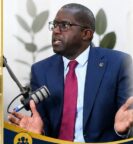
Odhiambo’s sentiments were echoed in a joint statement issued later that evening by opposition MPs led by Seme MP Dr. James Nyikal.
The legislators described Albert Ojwang’s death as emblematic of a broader trend of state violence targeting dissenting voices, particularly youth on digital platforms.
Ojwang’, who was arrested in Homa Bay on June 7 and reportedly found unconscious at Central Police Station in Nairobi the next day, died shortly after arriving at Mbagathi Hospital.
“This is not just another tragic death,” said Dr. Nyikal. “It is a chilling reminder of the state-sanctioned violence being meted out against citizens. Albert must not become just another statistic.”
The leaders invoked Article 33 of the Constitution, which guarantees freedom of expression, insisting that no Kenyan should face arrest, harassment, or death for holding dissenting views.
They accused certain security agents of acting with impunity, protected by powerful forces with unchecked authority.
“Some individuals in this country are suffering from a God complex,” they warned. “This culture of silence and impunity must end.”

Rarieda MP Dr. Otiende Amollo weighed in: “Citizens are no longer safe if rogue officers can abduct and kill at will. Albert’s only crime was thinking differently.”
The statement, signed by more than a dozen lawmakers including Ruth Odinga, Babu Owino, and Senator Eddy Oketch, called for transparent investigations and accountability at the highest levels.
“Sweep away those who believe they are above the Constitution,” Odhiambo urged. “Albert could have been any of our sons, brothers, or neighbours. If we don’t act now—who will be next?”
Civil society groups such as the Kenya Human Rights Commission, Amnesty International, and the Law Society of Kenya joined the chorus of condemnation, highlighting a pattern of repression against Gen Z activists leading digital protests against police brutality, corruption, and high taxation.
Though President Ruto previously acknowledged the crisis and pledged reforms, opposition leaders argued that promises unaccompanied by action risk leading the country down a dangerous path.
“What we are witnessing is not reform,” the lawmakers said. “It is regression—into fear, silence, and suppression.”

Ojwang, a resident of Kakot village in Homa Bay County, was arrested on Saturday, June 7, 2025, by officers from the Directorate of Criminal Investigations (DCI) over alleged offensive content posted on social media platform X (formerly Twitter).
He was transported approximately 350 kilometers from Homa Bay to the Central Police Station in Nairobi, where he died under disputed circumstances the following day.
Police claim Ojwang struck his head against a cell wall and was rushed to Mbagathi Hospital, where he was pronounced dead on arrival.
However, his family and human rights organisations have dismissed the official account, citing signs of physical trauma.
“We do not believe that he could have taken his own life,” said family spokesperson Joseph Okumu. Ojwang’s father, who viewed the body, reported severe head injuries and bleeding from the nose—evidence that, he claims, points to possible abuse or torture.
The Independent Policing Oversight Authority (IPOA) has launched an investigation. Its chairperson, Isaac Hassan, assured the public: “We will do everything possible to ensure that justice is served to the family.”
Several officers—including the station commander—have been suspended pending the outcome of the probe.
Principal Secretary for Interior, Dr. Raymond Omollo, has urged the public to remain calm and allow due process to take place.
Meanwhile, civil society organisations, including the Bloggers Association of Kenya, have joined calls for justice and accountability.
Albert’s death has once again cast a harsh spotlight on Kenya’s record of police brutality, particularly against young, outspoken citizens.
As the country waits for answers, many fear that without swift and transparent action, justice may remain elusive.
-Additional reporting by Dories Kwamboka