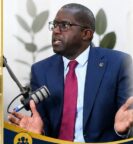
By Isaac Dan Bw’Onyancha
Pollster reports, such as the recent Infotrak ranking of Kenyan counties and governors, offer valuable insights into public perceptions of governance, leadership, and performance.
However, these reports require a nuanced examination of the methodology and interpretation of the findings.
Also Read
While such surveys can shed light on how residents view their leaders, they may not fully capture the complexity of governance in a diverse country like Kenya, where each region faces unique challenges.
One major critique is the methodology used in these reports.
Polls and surveys depend on sample sizes and the demographics of participants, which can sometimes skew the results.
For instance, urban centers like Nairobi or Mombasa may be overrepresented, while rural areas like Wajir or Isiolo could be underrepresented.
The differing needs and challenges between urban and rural counties mean that a ranking based on public opinion might not fully reflect the diverse realities of governance across Kenya.
A rural county, for example, may face infrastructural and resource challenges that a more urbanized county does not, yet both might be evaluated using the same metrics.
Furthermore, these reports often focus on public perception, which can be influenced by short-term issues, media narratives, and political sentiment.
Public dissatisfaction with certain aspects of governance, such as healthcare or roads, may not always be a result of poor leadership, but rather broader systemic issues, such as national budget allocations or economic constraints.
In counties like Kakamega or Kitui, residents may feel frustrated with inadequate healthcare services, but this could stem from national-level budgetary shortfalls rather than a failure of local leadership.
“Governance is a multifaceted and long-term process. Pollster rankings tend to focus on immediate issues such as road conditions, water supply, or corruption, which can overshadow the broader, long-term projects that take years to show results.”
–Isaac Dan Bw’Onyancha
For example, the governor of a county like Turkana might be focused on large-scale infrastructure projects, such as the construction of roads and dams, which will not yield immediate benefits but are essential for future growth.
A ranking that penalizes such efforts in favor of short-term, visible achievements could unfairly discredit leaders who are working toward sustainable development.
The diversity of governance contex6ts across Kenya also complicates rankings.
A governor in an economically disadvantaged county like Mandera may face vastly different challenges from a leader in a more developed area like Kiambu.
While Kiambu may have greater resources to address local issues, Mandera’s challenges could be more related to security concerns and infrastructure deficits.
A “one-size-fits-all” approach to assessing leadership fails to account for these significant contextual differences.
In addition, many of these reports highlight issues like corruption or mismanagement, which are certainly critical aspects of governance, but they may not always reflect the full picture.
Corruption in counties like Narok or Bomet, for example, could be tied to national-level corruption or systemic inefficiencies, not necessarily local leadership failures.
Moreover, political rivalries and incomplete information can sometimes skew public understanding of a leader’s performance.
Governors may be unfairly penalized in rankings due to factors beyond their control, including external political pressures or national policy decisions.
Snapshot of public opinion
Another important issue is the over-reliance on rankings as a measure of leadership effectiveness.
While rankings might provide a snapshot of public opinion, they do not always capture the full complexity of governance.
Leaders in counties such as Nyamira or Homabay may struggle with underfunded projects, but their ability to navigate these challenges does not necessarily equate to poor leadership.
Improvements in sectors like healthcare, education, or infrastructure often take years to show tangible results.
A ranking system that emphasizes short-term achievements could undermine leaders who are focused on laying the groundwork for long-term success.
Moreover, pollster reports, especially during election periods, can be influenced by political biases.
These biases can shape the way results are interpreted and used.
Political opponents may seize on low rankings to criticize a sitting governor, while incumbents may use the same data to highlight their achievements.
This politicization of poll results can lead to misleading conclusions that do not accurately reflect a leader’s true performance.
Finally, the interpretation of data from these reports must be done with care.
A low ranking in a category such as infrastructure development might be a result of historical underfunding, not necessarily poor leadership.
For example, counties like Baringo or Garissa, which have long been underfunded and neglected, may rank poorly in infrastructure, but this should be seen in the context of a national funding imbalance, not a failure of local governance.
In conclusion, while reports like those from Infotrak provide useful insights into public opinion, they should be viewed with caution.
They offer a snapshot of perception, which is not always an accurate reflection of reality.
A deeper, more comprehensive analysis of the unique challenges faced by each county, along with an understanding of the long-term nature of governance, would offer a clearer picture of leadership performance.
It is crucial to avoid drawing sweeping conclusions based solely on rankings and instead recognize the complexities and constraints that shape governance across Kenya.
-Bw’Onyancha is a Leadership and Governance expert and commentator. The views expressed are his own and do not necessarily reflect the position of KPC.