Text and Photos By Nyang’au Araka
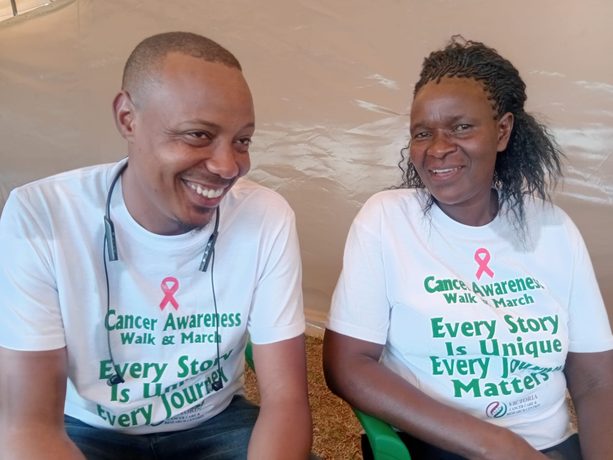
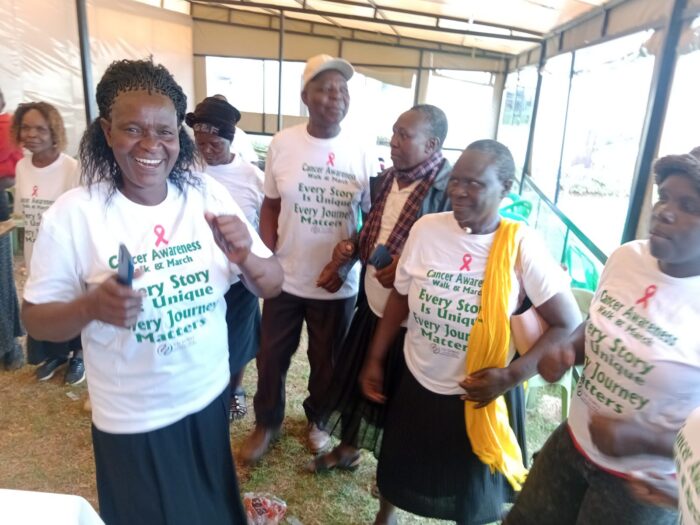
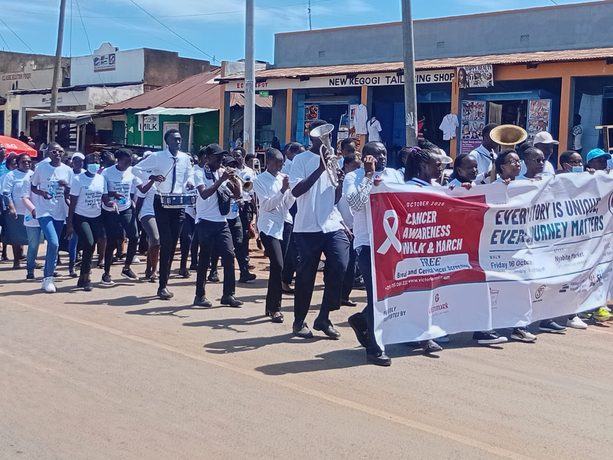
Dressed in identical white T-shirts, the men and women were among the happiest-looking participants at a cancer awareness walk in Nyamira Town.
They laughed, chatted and encouraged one another as they walked behind a music band. They had joined other residents in calling for greater cancer awareness and early detection.
Also Read
But behind their smiles, singing and dancing were painful stories of cancer diagnoses, difficult treatment and the determination to live beyond the disease.
Most belonged to the Nyamira Cancer Survivors Group, which has about 50 members. They have experienced different forms of cancer and for them, the walk was an opportunity to turn personal struggles into a message of hope.
Among them was Alice Saitoti, popularly known as Makau wa Raisi, who was diagnosed with breast cancer 17 years ago, and is now the chairperson of the group.
Saitoti’s battle with cancer started with an itch in her breast in 2009, and she had little idea that the discomfort would change her life. A visit to hospital a day after brought disturbing news: she had breast cancer.
“Some people warned me against going for surgery, saying it was the easiest way for me to die,” recalls Saitoti, a mother of four from Bokeira Ward, Nyamira County.
Nevertheless, she chose treatment and seventeen years later, Saitoti is alive and well, encouraging other patients and their families.
“I tell people that a cancer diagnosis does not necessarily mean the end of life,” she told this writer.
Established in 2018, the Nyamira Cancer Survivors Group offers a platform for members to share experiences, discuss nutrition and treatment challenges, and encourage one another.
The group has a registration certificate and bank account, although limited finances constrain its activities.
“We come to encourage one another,” Saitoti says, insisting that this alone gives the members a reason to stay close.
The membership includes survivors whose experiences span decades, including one of them who underwent a mastectomy, the surgical removal of a breast, 32 years ago.
For Saitoti, she received chemotherapy at Moi Teaching and Referral Hospital (MTRH) and radiotherapy at Kenyatta National Hospital (KNH).
She subsequently took tamoxifen for five years and continues to attend annual check-ups as recommended by the doctors.
“Continued monitoring is essential, but specialised investigations remain expensive,” she says.
“A positron emission tomography (PET) scan, for instance, can cost about Sh80,000.”
Saitoti notes that even with some Social Health Authority (SHA) coverage, patients face substantial out-of-pocket expenses.
Zaida’s fight against stage-four cancer
Zaida Hassan recalls that she initially mistook an abnormality in her breast for a fungal infection. She tried remedy cream and aloe vera, hoping the problem would disappear, but it persisted.
“At first, I thought it was a fungal infection but it turned out to be cancer,” she recalls.
“I underwent investigations such as an ultrasound, mammogram and CT scan. Later, a biopsy was conducted by Dr Kisi Bahati in Kisii and it confirmed stage-four breast cancer.”
Treatment was demanding for Zaida, who had just retired from the civil service.
She underwent chemotherapy, lost weight and her hair, and received 18 rounds of targeted therapy using Herceptin, a medicine used to treat certain types of breast cancer.
“A PET scan in Ruai, Nairobi, was also part of my treatment,” she says.
Although Zaida’s condition improved, the mother of three continues with medical care and regular monitoring because cancer cells can remain inactive before becoming active again.
“I thank God for bringing me this far,” she says with a smile.
Zaida urges women not to ignore unusual breast changes or rely on unapproved remedies.
“Always go for test when you get any signs,” she advises, also urging parents to pay attention as their daughters too are at risk, however young they may be.
Zaida’s journey has been financially draining.
“I have spent more than Sh2 million on treatment and related care, with significant expenses remaining despite SHA coverage,” she says.
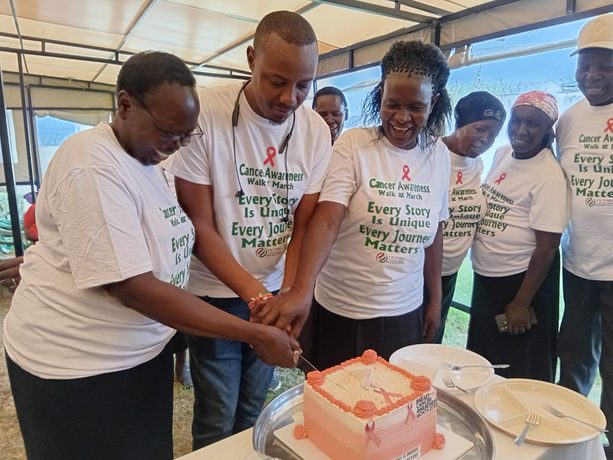
Zaida is partnering with Victoria Cancer Care and Research Centre for support and awareness creation, and receives encouragement from the Nyamira Cancer Survivors Group.
Confronting prostate cancer
A male survivor who chose not to be named told this writer that he experienced back pain, disturbed sleep and reduced sexual desire.
His prostate problems had persisted for more than a decade before cancer was discovered, a situation he thinks complicated chances of recovery.
“It’s unfortunate I didn’t know it early,” he says.
Diagnosed with stage-three prostate cancer about a year ago, the 62 year old father of five has undergone treatment and says the disease has regressed.
He calls on men to overcome the reluctance to discuss health problems, particularly those involving urination and sexual function.
“Change the notion that cancer kills and fight it,” he says, urging men to seek medical check-ups instead of waiting until symptoms become difficult to ignore.
Nyamira’s cancer awareness task
The survivors’ personal stories come amid renewed efforts to improve cancer awareness and access to care in Nyamira and Kenya at large.
They spoke after a cancer awareness walk in Nyamira Town, which included screening activities for breast, cervical and prostate cancers.
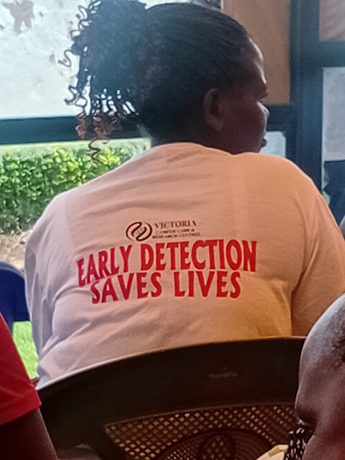
The walk started at Nyabite Market and terminated at Victoria Cancer Care and Research Centre.
Dr Anthony Muchiri, an oncologist at the facility told this publication that women in their mid-30s and early 40s were increasingly seeking breast cancer treatment at the facility.
“Here, the average age of the women I see with breast cancer is about 40, 35 thereabouts,” he said.
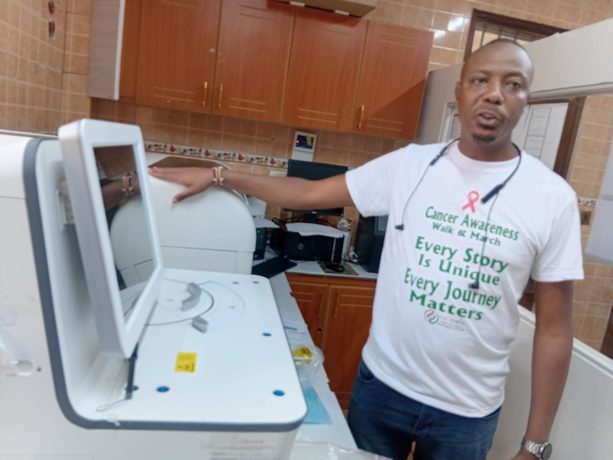
Dr Muchiri called for more research into breast cancer among African women, including tumour characteristics and responses to treatment.
He also advised patients not to fear biopsies, which help establish whether suspicious growths are cancerous.
Dr Muchiri noted that some patients from Nyamira travel to as far as Eldoret and Nairobi despite specialist services being available closer to home.
The journey alone can cost about Sh5,000, excluding treatment and other expenses.
Further, he noted the absence of a comprehensive local cancer registry in Nyamira, which was making it difficult to establish the full extent of the disease in the county.
However, the National Cancer Institute of Kenya’s breast cancer registry recorded 24 cases among Nyamira residents between 2020 and 2023. Notably, these are reported cases, not a complete count of everyone affected.
Nationally, Global Cancer Observatory (GLOBOCAN) 2024 estimates, reported in August 2026, put annual new cancer cases at approximately 35,867 and cancer-related deaths at 22,888.
Breast cancer accounted for an estimated 5,822 new cases and 2,882 deaths annually, making it Kenya’s most commonly diagnosed cancer.
Prostate cancer accounted for 3,601 new cases and 2,199 deaths.
A bettter tomorrow
For Saitoti and her fellow survivors, raising awareness is only part of the battle as they also want patients to afford treatment and continued medical care.
“As a group, we hope to expand our outreach, strengthen partnerships with healthcare providers and promote healthier lifestyles, but limited resources remain a challenge,” she says.
“Recovery can involve surgery, chemotherapy, radiotherapy, targeted medicines, repeated scans and years of follow-up appointments, placing considerable pressure on families.”