By Mandere Onyinkwa
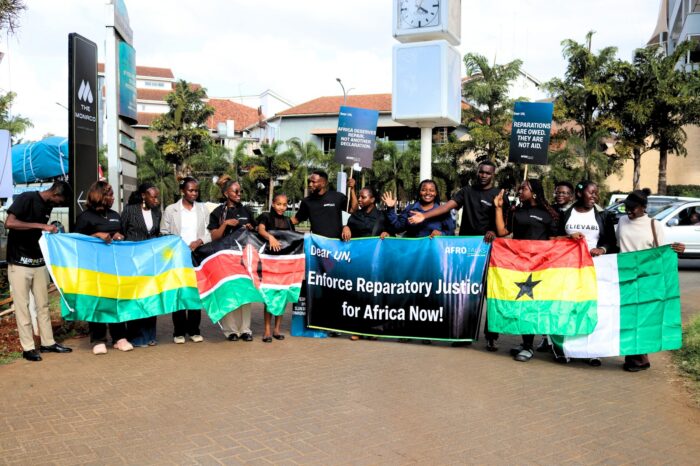
African youth advocates have petitioned the United Nations in Nairobi, demanding enforceable measures to address the historical injustices of slavery, colonialism and economic exploitation.
The AfroTalks Youth Assembly formally presented the petition at the UN headquarters on Thursday, calling for concrete action to address the lasting consequences of historical injustices for Africa and people of African descent.
Also Read
In a statement issued on Friday, the assembly said the petition sought to move reparatory justice beyond international declarations and diplomatic acknowledgements towards practical remedies and accountability.
The initiative encountered security restrictions and interventions by authorities that significantly limited participation in what organisers had intended to be a peaceful gathering.
Despite the challenges, representatives of the assembly proceeded to ensure the petition reached the UN premises.
AfroTalks founder and convenor Bight Tenbil said decades of acknowledging historical injustices had not translated into meaningful accountability.
“It has been very obvious that, over the years there has been no accountability. It is just a matter of recognition, acknowledgement and nothing else,” Tenbil said.
Compensation and institutional accountability
The petition challenges the international community, particularly the United Nations, to establish mechanisms for addressing the enduring effects of slavery, colonialism and economic exploitation.
It calls for a structured international framework for reparatory justice, including restitution, compensation, economic redress and institutional accountability.
The assembly is also seeking consideration of measures to address structural disadvantages inherited from centuries of exploitation.
It argues that reparatory justice should not remain an indefinite subject of international discussions without clear obligations, timelines and accountability mechanisms.
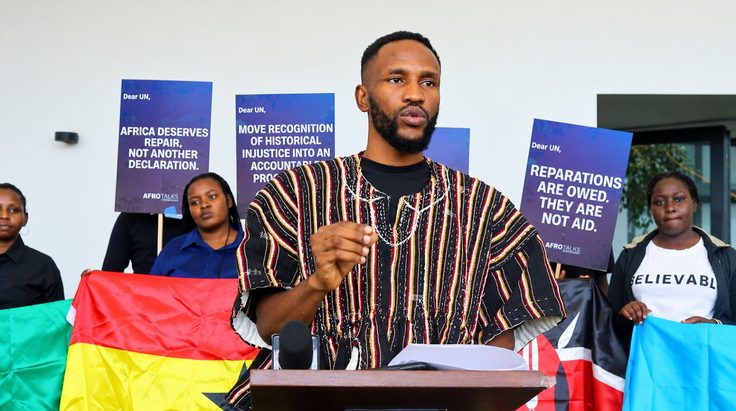
The organisers said the October 22 presentation marked the beginning of a sustained advocacy campaign rather than the conclusion of a single demonstration.
They plan to pursue diplomatic engagement, international advocacy, youth mobilisation and institutional follow-up to secure a substantive response to the petition.
The campaign will also seek to broaden discussions on reparatory justice among African countries, the diaspora, academic institutions, civil society organisations and relevant international bodies.
The assembly further called for peaceful civic participation and the protection of legitimate advocacy within international institutional spaces.
AfroTalks Nairobi 2026
The petition forms part of the wider discussions surrounding AfroTalks Nairobi 2026, themed “Redefining African Sovereignty through Ownership, Capital and Innovation”.
The main conference is scheduled for Saturday, October 24, at Trademark Hotel in Nairobi.
Through the initiative, the assembly seeks to link reparatory justice to broader questions of African sovereignty, economic independence and the right of future generations to inherit a continent no longer constrained by unresolved historical injustices.
The group said it would continue seeking formal engagement with relevant UN offices, pursue acknowledgement and consideration of the petition, and build partnerships to advance its demands.
The campaign is being promoted under the hashtag #UNEnforceReparatoryJusticeNow.
AfroTalks describes itself as a Pan-African platform focused on amplifying African voices, advancing the African Dream and connecting emerging leaders, entrepreneurs, policymakers and changemakers through conferences, policy dialogue, youth advocacy and cross-border collaboration.
The AfroTalks Youth Assembly brings together young African advocates seeking to influence the continent’s future through institutional engagement and collective action.