By GPC Reporter
East African Community (EAC) health ministers have agreed to strengthen regional coordination in the prevention, detection and response to Ebola and other emerging public health threats.
The decision was reached during the 26th Ordinary Meeting of the EAC Sectoral Council of Ministers of Health, which concluded in Arusha on October 6.
Also Read
The ministers endorsed measures aimed at improving cross-border health surveillance, information sharing and access to essential medical supplies as the region responds to ongoing outbreaks and other health emergencies.
Among the mechanisms discussed was the EAC Health Decisions and Directives Tracking Mechanism, which the Council wants strengthened through regular reviews and a Decision Implementation Dashboard.
The system is intended to improve accountability and track implementation of regional health commitments.
The Council also reviewed progress in the EAC Pooled Procurement Mechanism, with all eight Partner States now onboarded and trained to use the digital information-sharing platform.
The mechanism is expected to improve access to medicines, vaccines, diagnostics and other essential health products while supporting regional production and reducing reliance on external supply chains.
Ministers also considered the EAC Regional Information Sharing Platform for Pandemic and Epidemic Intelligence, which is expected to facilitate real-time sharing of health information, strengthen epidemic intelligence and support evidence-based decision-making.
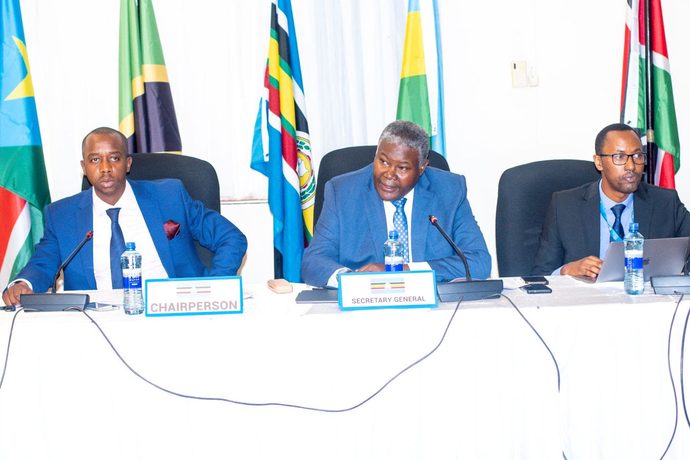
Addressing the ministerial session, the Chairperson of the EAC Sectoral Council of Ministers of Health, Dr Ayume Charles of Uganda, said public health threats required a coordinated regional response because diseases do not respect national borders.
“Health sovereignty is critical for the region and Africa as a whole,” Dr Ayume said, calling for greater investment in local manufacturing of essential health products.
EAC Secretary General Amb. Stephen Mbundi said recent outbreaks had demonstrated the region’s vulnerability to health emergencies and their potential impact on communities, economies, cross-border movement and regional integration.
“We must sustain investment in surveillance, information sharing, rapid detection and coordinated response and health workforce capacity,” Mbundi said.
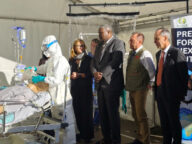
The EAC has established a Mobile Laboratory Network comprising 10 laboratories across seven Partner States.
The facilities provide rapid diagnostic capacity at strategic locations and points of entry and have supported responses to Ebola, Marburg, Covid-19 and Mpox.
The regional bloc plans to expand the network from 10 to 34 mobile laboratories by the end of 2027.
The Council also reviewed progress in deploying mobile laboratories, training frontline health workers, supplying personal protective equipment and strengthening surveillance and information-sharing systems.
The ministers further discussed regional centres of excellence for medical and health sciences education, specialised healthcare and research, as well as a proposed EAC Regional Centre of Excellence for Climate Change and Health to be hosted by South Sudan.
The meeting also called for stronger regional capacity to address communicable and non-communicable diseases, antimicrobial resistance, climate-related health threats, maternal and child health and other emerging public health challenges.