By Josiah Kariuki
The 5th East African Broadcasting Convention 2026 has renewed calls for African media houses to embrace artificial intelligence while safeguarding ethics, credibility, and authentic storytelling in an increasingly digital world.
Held at a Nairobi hotel the convention has brought together regulators, broadcasters, journalists, policymakers, media executives, and young innovators.
Also Read
On Tuesday, attendees examined how artificial intelligence is reshaping journalism, broadcasting, and content distribution across Africa.
Held under a theme aligned with Kenya’s digital transformation agenda, the forum focused on the opportunities and challenges presented by rapid technological change, particularly the growing influence of AI in media operations.
Chief Guest Stephen Isaboke, the Principal Secretary for Broadcasting and Telecommunications in the Ministry of Information, Communications and the Digital Economy, said artificial intelligence was already transforming global communication systems and newsroom operations.
“AI is now shaping how content is generated and distributed,” Isaboke said.

He urged broadcasters and journalists to adapt to emerging technologies while maintaining public trust, warning that misinformation, manipulated narratives, and algorithmic bias posed serious risks in the digital era.
The PS noted that AI is increasingly influencing content production, audience engagement, personalization systems, fact-checking, and broadcasting infrastructure, making adaptation unavoidable for media institutions.
Joram Temesi Mukani, Principal Secretary for Information and Broadcasting at the ministry, described the convention as timely and consistent with Kenya’s broader digital transformation strategy.
He said the discussions reflected the government’s commitment to modernizing communication infrastructure while creating policies that support innovation without compromising media integrity.

The convention opened under the leadership of Tabitha Mutemi, Chairperson of the African Public Broadcasters (APB), who emphasized the urgency of adapting to technological change.
“The future is no longer approaching, the future is here with us,” Mutemi said.
Discussions throughout the convention also focused on preserving journalism’s human element amid rapid automation and AI adoption.
Viktoriia Shatokhina, a producer at RT Africa, highlighted journalism’s role in fostering understanding between communities and cultures, saying storytelling remains fundamentally human despite technological advances.
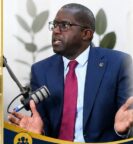
Meanwhile, David Omwoyo, Chief Executive Officer of the Media Council of Kenya (MCK), cautioned against overreliance on artificial intelligence.
“Culture and nuances of humanity are not understood by AI. AI has no human touch,” Omwoyo said.
His remarks sparked debate on whether technology can replicate empathy, moral judgment, and cultural understanding in journalism.

The convention also emphasized youth participation in shaping Africa’s media future.
Agnes Kalekye, Managing Director of the Kenya Broadcasting Corporation, challenged young Africans to take ownership of the continent’s narratives in the evolving digital space.
“To the young, you are the authentic African voices, the ones who will advance the African story in the evolving digital space,” Kalekye said.
Organizers appreciated collaboration between key institutions including the Communications Authority of Kenya, Kenya Ports Authority, the Media Council of Kenya, KBC, and the Ministry of Information, Communications and the Digital Economy.