By KPC Reporter
A public exchange between Homa Bay Governor Gladys Wanga and her Siaya counterpart James Orengo has continued to attract public attention, spilling into the streets as groups took opposing positions on the dispute.
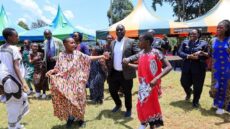
In Homa Bay, women demonstrated in solidarity with Wanga and condemned remarks they considered demeaning, while another section of residents publicly came out in support of Orengo.
Also Read
In a conciliatory public statement, Wanga said she was speaking not in her official capacities but “simply as Gladys: daughter, mother, wife, and a woman” reflecting on remarks recently made about her..
Wanga said she initially chose silence because she believes “not every disagreement demands public contest, and not every hurt should invite a public response,” but concluded that the moment had grown beyond individual politics.
Addressing Orengo directly, she said she had long viewed him as a respected elder and mentor figure.
“You have represented courage, conviction, and the possibility of principled leadership,” she wrote, adding that she had held him “with the affection and deference one would extend to a father figure.”
But she admitted the remarks left her hurt.
“That is perhaps why they hurt,” she said, arguing that criticism directed at women leaders often carries consequences that extend beyond politics.

Wanga said comments that “diminish, ridicule, or reduce” women because of gender, age or their place in public life reinforce experiences familiar to many women facing exclusion and intimidation.
“Many women are told to speak more softly, lead smaller, occupy less space, or defer — not because they are wrong, but because they are women,” she stated.
Despite the public exchanges, Wanga said she would not escalate the dispute.
“I therefore choose forgiveness. I was humbled just as I was humiliated,” she wrote.
She also signalled willingness to move forward through dialogue, saying the region deserved “leadership that inspires hope, not needless turf wars with a girl the age of your daughter.”
Wanga urged leaders to preserve dignity even amid disagreement and invoked the words of Malala Yousafzai: “We realize the importance of our voices only when we are silenced.”