By KPC Reporter
The Kenya Medical Research Institute (KEMRI) has officially been awarded a Specialized Postgraduate Degree-Awarding Charter by President William Ruto.
The move marks a historic milestone in Kenya’s scientific, research, and higher education landscape.
Also Read
The Charter was conferred during a ceremony held at State House Gardens, Nairobi, elevating KEMRI into a fully-fledged research and training institution with authority to offer advanced postgraduate academic and professional programmes.
The new status is expected to strengthen Kenya’s capacity in biomedical research, innovation, disease surveillance, and public health response while reducing reliance on external institutions for specialized scientific training.
President Ruto described the Charter as a strategic national investment in science, innovation, and health security.
“For decades, KEMRI has been at the forefront of scientific discovery and public health advancement in our country and across Africa,” said President Ruto.
“By granting KEMRI the authority to award its own degrees, we are recognizing its demonstrated capacity to train world-class health scientists and researchers.”

The President noted that KEMRI’s research has shaped national and global health policies and strengthened responses to major public health threats including HIV/AIDS, malaria, tuberculosis, and COVID-19.
Health Cabinet Secretary Hon. Aden Duale said the Charter would help address the country’s shortage of researchers and improve long-term scientific preparedness.
“Currently, Kenya has approximately 250 researchers per million people compared to a global average of 1,500,” said Duale.
“KEMRI’s Charter is one of the most important steps this country has taken to close this gap.”
According to KEMRI leadership, the Charter will enable the institution to expand postgraduate programmes, research fellowships, and innovation partnerships focused on emerging health challenges in Kenya, Africa, and globally.
KEMRI Vice Chancellor and CEO Prof. Elijah Songok described the development as the beginning of a new era for the institution.
“Today, we transition into a new era — one where we not only generate knowledge, but also formally transmit it through structured academic programmes that will shape the future of healthcare in Africa,” said Prof. Songok.
The institution clarified that it will not transition into a conventional university but will retain its identity as a strategic national research institution with an expanded mandate to offer specialized postgraduate training and award degrees.

The Charter award aligns with Kenya’s broader agenda on Universal Health Coverage, research and innovation, and strengthening national preparedness against emerging global health threats.
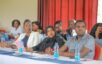
The ceremony was attended by senior government officials, scientists, diplomats, development partners, academia, and health sector stakeholders from across the region.